This photo has been floating around the Internet since 2010 and now for the new year 2017, here it is again. So, I will rerun the post I made about it during its 2012 appearance. Some of the "facts" have changed a bit from the last time it showed up as it always the case with pure fabrication.
All of the staff and animals here at Reptile Gardens are just now settling down for, what appears to be, a chilly winter season. Everything is starting to shift gears from our busy fall schedule to an all ready chock full winter list of chores and updates!
In conversation with friends and Guests it occurred to me recently that the average person knows virtually nothing about antivenoms. Not that most people should, it really doesn't impact their lives. However, I have also found most people are quite fascinated when I tell them about this unique medicine.
As I mentioned in the first part of this post last week, our reward sign exists mostly to make a point that most reptile zoos fail to mention: not how big reptiles really get, but how big they really don't get.
We have a sign on the grounds—which can also be seen on our website—that lists various reptiles and how much we would pay for really large specimens. We've had many thousands of questions over the years about this sign. One of the reasons we've had so many questions about how large reptiles (especially giant snakes) can get is because their size may be the single most misunderstood thing about these already very misunderstood animals.
One of the most common snakes in South Dakota, west of the Missouri River, is a little-seen snake called the Pale Milksnake (Lampropeltis triangulum multistriata). These snakes are surprisingly common around here but are very secretive and so, people are often not familiar with them. They love the rains in the spring and fall, which increases the likelihood of encounters with humans.
So, now that we know how to avoid rattlesnakes and what to do if we encounter one. What should we do if we don't follow Terry's advice and leave all snakes alone? What if the odd encounter happens where we unknowingly step on or sit next to a rattlesnake and the unfortunate occurs?
Snakes are an integral part of our ecosystem and are, in fact, the number one predator of rodents and other little creatures we consider pests. These pests can be carriers of even nastier pests and diseases. So, in fact, we should be grateful for our legless neighbors.
It's that time of year again — Spring in Western South Dakota. Our spring brings rain (maybe), sunshine, green grass, the occasional snowstorm, tourists, and of course rattlesnakes.
Pretty soon we will start getting frantic phone calls from local folk with snakes in their yard and from animal control with rattlesnakes in buckets that they got from those same yards. We will hear from people asking how to avoid them when hiking, camping and fishing, from those who want to know how to keep rattlesnakes out of houses, garages and yards, and, of course, what to do if they encounter a snake.
For many years we had an immensely popular "Top Ten Most Venomous Snakes" list posted here at the Reptile Gardens and, subsequently, on our web site. Many of you remember this list and have asked about it. We get thousands of web search hits to our site every year looking for just such a list.
Sometimes the internet is a great source of information and sometimes...well...it is like the National Enquirer. If you are not intimately involved in a particular area of study it can be pretty hard to know the difference when reading things online or seeing them on TV. To make matters more complicated, most of us (me included) tend to be pretty trusting anyway. When it comes to reptiles and amphibians, you can count on the staff at Reptile Gardens for the true facts, no sensational tabloid-style lies or exaggerations from us.
This is part 3 of our answer to a recent question involving increased snake activity in the Black Hills. If you missed them, read Part 1 and Part 2 . This time we'll give you some advice on how to protect yourself and your animals from snakes.
During the many years we have collected snakes, we have accumulated dozens of experiences, some of which were nearly tragic, but as long as they didn't end in tragedy, they can be looked back upon with humor.
We recently responded to a question about the rattlesnake population in the Black Hills. Part of the question asked if people could take steps to actually reduce that population.
As we explained, this perception of a snake population increase is mistaken, so there really isn't an overpopulation issue.
A recent question about rattlesnakes prompted us to write this post, since we figured it may be helpful to many people in the Black Hills area.
The question involved concerns that there has been an increase in the population of rattlesnakes, or that there was a nearby den of snakes that contributed to increased snake encounters and danger to children and pets.
We love all animals, wild and domesticated. Unfortunately due to a high number of recent incidents with dogs, our insurance company has advised us that we can no longer allow dogs, or other personal pets, on the Reptile Gardens grounds. ADA approved service dogs are, of course, allowed although there are three areas where they are not allowed for their safety and the safety of our animals. We do offer a shaded grassy area adjacent to our parking lot for walking your dog. We only ask that your pet be leashed and attended to at all times. You are welcome to come and go from the park as often as you like to tend to your dog. For more information, visit our FAQ Page

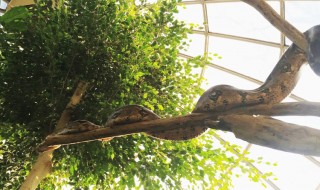 Soaking up some sun in the dome.
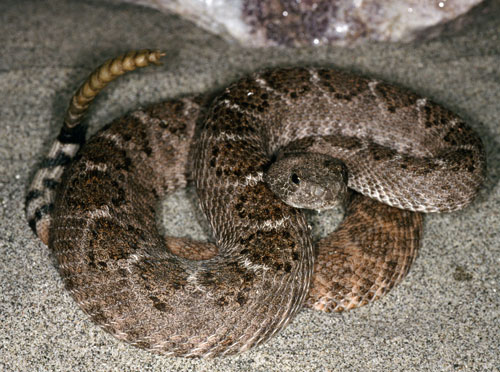 Western Diamondback Rattlesnake
 Pale Milksnake
 Rhinoceros Viper
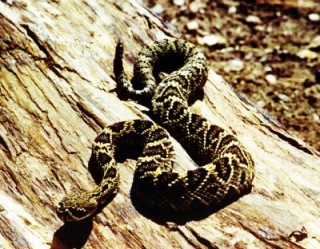 Eastern Diamondback Rattlesnake
  Earl & Maude Brockelsby
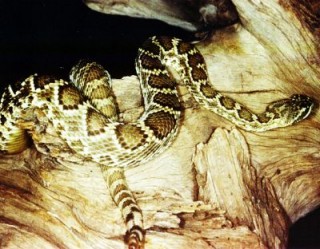 Mojave Rattlesnake
 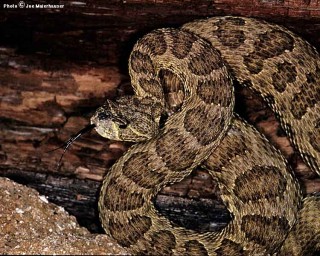 Rattlesnake